Here are the latest newsletters for my followers to peruse:


|
Hi Story Lovers! We’re excited to announce a new always open submission category at WestWord: Hermit Haven. Hermit Haven is our home for hermit crab stories — narratives that inhabit borrowed structures. Stories told through restaurant menus, shopping lists, instruction manuals, quiz answers, school reports, medical forms, or any other existing format you can imagine. Like the hermit crab finding shelter in a found shell, these stories use unconventional frameworks as vessels for their narratives. It’s a playful, inventive form that lets you experiment with structure while telling compelling human stories. The details:
If you’re a member of our WestWord Community you now get one free submission a year included with your membership and the submission link has been added to the Member Goodies page. Published stories will be considered for our nomination for prizes (Best of the Net, Best Small Fictions, Best Microfictions, etc.). We can’t wait to see what creative homes you’ll build! We’ve adapted the word counts on a couple of our submission categories too: Flash Focus maximum word count has increased from 750 to 1000. The Short Story Spotlight now has a minimum word count of 2,000 and maximum of 5,000. With love, Amanda 💙
|


 |
Welcome to the Mindful Writer where I share ideas, readings and writing prompts designed to connect you more deeply and authentically to yourself, your writing craft, and everyone and everything you’re sharing this human experience with. You can find out more about me here. If you find value in my offerings, please consider taking out a paid subscription or buy me a cup of tea to support my work and say thank you for all of the posts I share here.
 |
Hi Mindful Writers, welcome to my new feature for 2026. While the posts are free for all to read, only the paid members of the community can send in questions for me to answer. These can be about writing craft, mindful living and writing, finding our way and meaning in these time we find ourselves living in, anything and everything that’s on their minds.
Each month, I will also create a short teaching video inspired by the questions I’ve received, which is included at the end for paid subscribers. Time got away from me this month though as I have been so busy with the 2026 Year of Mindful Writing course starting and other teaching and mentoring commitments, so this bit now starts next month! I have written what I was going to say instead at the end.
Many thanks to Shoshana and Michelle this month for their excellent questions.
With love,
Amanda 💙
 |
What is the best way to create structure for a writing project and still maintain the creativity that launched the idea in the first place? I’ve been writing now for years, mostly to mine my own subconscious by responding to prompts. It’s been fun and illuminating, but I’m missing the sense of accomplishment that comes with working towards a goal. I just started reading Libbie Hawker’s book “Take Your Pants Off” and appreciate her clarity around how to create a book outline. But even that approach concerns me, as I fear it will snuff out the creative flow and the joy that writing brings when its destination is unknown. — Shoshana
This is a path I have walked with my own novels: to plan and outline or not to plan and outline? I didn’t even know such an approach existed when I started writing my first novel and just wrote scenes and chapters as they came to me. During the years I was writing that story though, I learned all about how writing novels works. I discovered different structures and how the story arc works across them all, I now knew how character transformation was tied to what happened in the external world of the story, and how vital it was that setting and descriptive writing worked on multiple levels. And a myriad of other elements that feed into the construction of a novel.
So when I set off on the second novel, I applied what I had learned and before I wrote any scenes I created a plot/plan/outline and tried to make the protagonist, Evie, who had been living in my head for a couple of years by then, go along with it. She was having none of it and the writing didn’t go well at all. I had also decided it would be more saleable (as things like that mattered to me then!) if I wrote in third person. She didn’t like that either. So we limped along for several months not really getting anywhere. To the point that I stopped trying.
But she still wanted me to tell her story and it was when I was away teaching at a writing festival a couple of months after giving up, that the flow and the joy returned to me. When I wasn’t teaching, I went to a workshop taught by the author Shelley Harris and the exercises she had us do freed the story for me from the box I had been trying to squeeze it into.
So when I got home, I threw the plan out and the ten thousand or so hollow and clunky words I’d written and started again. In first person. I did what I had done with the first novel and just let the character tell her story through me. But all of the learning I’d done seeped into how that story came out. The first draft naturally had the story and character arc in place, it had layered meaning through the way I’d written the settings, and the first person voice created immediacy and connection in a way the third person hadn't been able to.
I’ve not made a plan or outline since. I connect with the characters that come to me and I let them tell me their story and I write it down. Always in their first person voice. Then when I edit, I bring in all of the craft elements needed to make it a novel that works on a structural, pacing and emotionally resonant level.
So, Shoshana, I’d recommend learning all about the different elements and having them in your subconscious. But let the first draft be a creative flow of discovery and joy. Follow the flow where it takes you as that, I’ve learned, is where the real magic of creation lies.
I am re-reading Verlyn Klinkenborg’s excellent “Several Short Sentences About Writing”. In it he extols short sentences, their directness and clarity, their expunging of superfluous words and thoughts and fluff. As a teacher I am a big fan of short declarative sentences; I teach my pupils to master them because they are the anchor for all sentences. I would love to hear your thoughts about short sentences. Do we use them enough? When should we use them and how? — Michelle
Sometimes they’re good. Other times not. Context is all.
When I worked as a journalist, short declarative sentences were the building blocks of my trade. But when I turned my hand to novel writing and needed to convey so much more than basic information, in a way that brings people and place and ideas to life in readers’ minds, longer sentences were often needed. I like to think they still didn’t contain superfluous words and fluff though. Short sentences are often used in flash fiction to great effect. This one I published at WestWord is a great example of long and short working together to create the feeling of being in the narrator’s chaotic mind.
Short sentences often work well in fiction and creative nonfiction when pace and tension is needed. Or to convey panic, confusion and fear in the protagonist’s inner thoughts. While long sentences are good for when you want the reader to linger with the moment, with what’s being revealed about the story and character, when what your conveying is working on a metaphorical level as well as a storyline one.
But, there’s no real answer to when to use them and how. Context is all. Too many short sentences together can make the writing feel flat. Sometimes more words are needed to connect with a reader on a visceral and not just information level. Let your intuition guide you. Read your work aloud. Does it sing and flow and make you feel things? As that’s what we really want it to do.
What I was going to say in my video…...

Continue reading this post for free in the Substack app
| ||||||||||


Visual Storytelling: Cinematic Techniques for Flash FictionA flash fiction workshop with Amanda Saint
This workshop is included with our membership. If you’re not a member yet, sign up here to watch this session and over 50 other video workshops in our archive, all focused on writing great fiction.
What if you could make your flash fiction leap off the page like scenes from a film? In this interactive workshop, we’ll explore how the visual language of cinema can transform your short pieces into vivid, unforgettable experiences. You’ll discover how to “storyboard” your flash pieces, learning to see your stories as visual moments that build towards revelation. We’ll practice using close-ups to reveal character truths, perspective shifts that create tension, and precise visual details that carry emotional weight. Through practical exercises and analysis of masterful flash pieces, you’ll develop a new toolkit for crafting stories that feel both intimate and expansive. Whether you’re new to flash fiction or looking to deepen your practice, this workshop will help you create pieces that resonate long after the final line. Perfect for writers who want to harness the power of visual storytelling to create flash fiction that feels as immersive and compelling as your favourite films. Workshop Host: Amanda Saint is the author of two novels, As If I Were A River (2016) and Remember Tomorrow (2019) and a novella-in-flash, Pressure Drop (2024). Her short stories, flash and micro fictions have been widely published in journals and anthologies, and placed and listed in many international prizes, including the Mslexia Flash Fiction Prize and the Fish Flash Fiction Prize, nominated for Best Small Fictions 2023, and selected for Top in Fiction four times in 2024. Amanda founded Retreat West, providing an online writing community, competitions and courses in 2012. From 2018-2023 Retreat West published 24 books and was named Most Innovative Publisher at the 2020 Saboteur Awards (shortlisted 2019). In 2022, she launched the WestWord literary magazine and merged Retreat West into it in 2025. She also writes The Mindful Writer on Substack and launched a new creative venture inspired by it. Find out more about that here. Watch the replay below and access the workshop handout that includes info on what we covered in the live session and has 5 great additional prompts to try!...
|

Welcome to the Mindful Writer where I share ideas, readings and writing prompts designed to connect you more deeply and authentically to yourself, your writing craft, and everyone and everything you’re sharing this human experience with. You can find out more about me here. If you find value in my offerings, please consider taking out a paid subscription or buy me a cup of tea to support my work and say thank you for all of the posts I share here.
Writing ✍️ Our Way Into Healing - On Reconnecting to Gratitude and Meaning in Our LivesA recording from Amanda Saint and Dr. Bronce Rice's live video
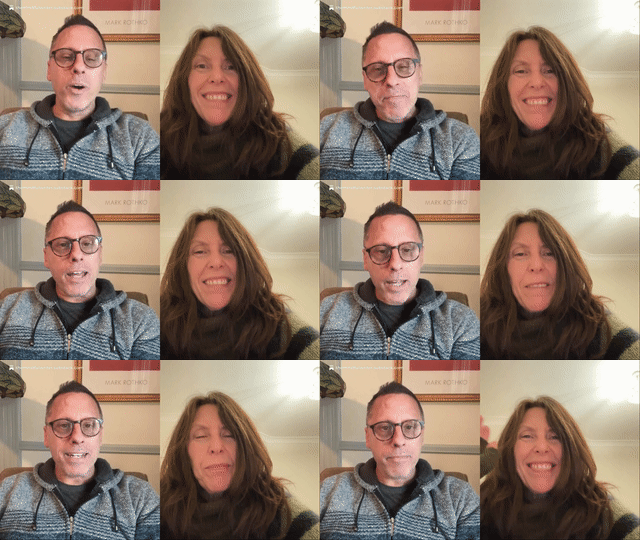
Hi Mindful Writers, just a quick note to share my first ever Live appearance from yesterday evening as a guest of Dr. Bronce Rice. It was fun! And I got to talk about mindful writing and how it changes everything about our relationship with our craft, ourselves, and our world. And how what I’m learning on my Mindfulness Mentoring Training will be woven into my writing teaching and mentoring, and my life. Thank you to Yasmin Chopin, Alexey Zaitsev, Patti Wohlin, and many others for tuning into mine and Bronce’s chat. Do let me know if you’d be interested in me hosting Lives myself as I really enjoyed it!
With love, Amanda 💙
|



 |
 |
Hi Story Lovers!
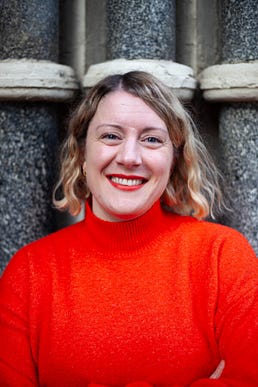
We have the deadline coming up for our annual First Chapter competition in which you can win a feedback meeting with our literary agent judge, which this year is Louise Buckley. Louise is with The Ampersand Agency, where she represents a diverse list of commercial and upmarket fiction across adult and young adult categories. With a keen eye for compelling narratives and fresh voices, Louise has built a reputation for championing authors who bring emotional depth and originality to their work. She is particularly drawn to psychological thrillers, contemporary women’s fiction, book club reads, and YA that tackles complex themes with authenticity.
 |
Before joining The Ampersand Agency, Louise honed her editorial expertise working in publishing, giving her a comprehensive understanding of what makes a manuscript stand out in today’s competitive market. Her passion for discovering new talent and nurturing writers through their publishing journey makes her an invaluable judge for this competition.
Getting your submission ready
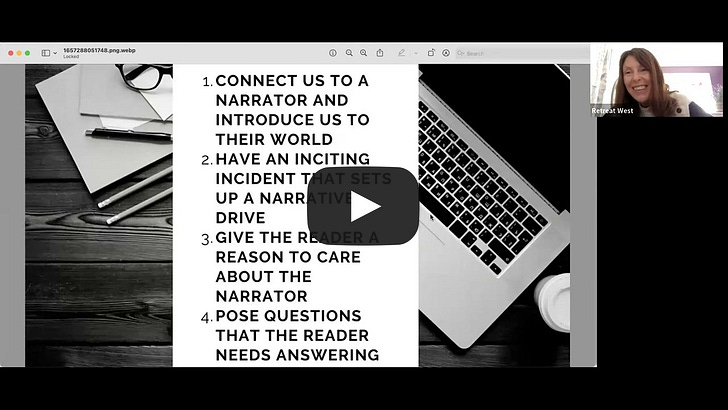
Back in late 2023, I ran a workshop called Fabulous First Chapters and to help you all with your submissions for the comp, I’m sharing the replay link here with you today.
Please drop a tip in my jar to say thanks!
And good luck with getting your chapters polished up to win that meeting with Louise. We’re looking forward to reading them all!
With love,
Amanda 💙
| ||||||||||
Today I’m delighted to welcome Teri Leigh 💜 back with a guest post all about our relationship with money. Mine has often been fraught! How about yours?
The Story Your Money is Telling (And How to Rewrite It)I was eight years old, and I had just won the creative writing award for the third grade. When my name was called, I put my hands over my nose and mouth and took a deep breath in, just like Miss America did when she learned she would be getting the crown. I never understood why the beauty pageant queens smelled their hands whenever they won, but they did, so I figured that's just what people do when they win something. The story I wrote was about walking along the beach and one-by-one tossing jellyfish that had washed up on the sand back into the water. (twenty years later, I read a version of my story substituting starfish for my jellyfish, written and published by someone else, in one of the Chicken Soup for the Soul books). Sometimes, I wish I could go back to the mindset that I had as that 8-year-old winning that award. That moment I made a life-forming decision. I wanted to be a writer when I grew up. I started saying that to anyone and everyone who would listen (which wasn't very many people because I was so shy). That bright eyed little girl told herself a story, and made herself believe it...that she would be a writer one day. And she was right. . . But somewhere along the way, between the bullying of middle school and the college decisions of high school, she decided she wouldn't likely be able to make a living as a writer, so she'd better have a backup plan. I went to college for creative writing, and became a teacher. If I couldn't write, at least I could teach writing. And that's when I let an unreliable narrator take control of my story. That narrator is Money, and over the next several decades I engaged in an abusive relationship with Money—all because I decided (or let society tell me) that I couldn't make a living as a writer. Eight-year-old me who breathed in victory and accepted that award with pride would never have handed over her creative power to a story about scarcity. But her grown-up self did.
The Money Story You Didn't Know You Were WritingAs writers, we already understand something most people don't: every story has layers. There's the plot happening on the surface, and then there's the deeper story—the one about character motivation, inherited patterns, and the wounds that drive every major decision. Money has been writing one of these deeper stories layered inside the deeper tissues of our beings. While we've been consciously crafting sentences and paragraphs out of the fantastical ideas that swirl around in our imaginations, our financial decisions have been following their own narrative logic. And somehow, when practicality and imagination duel, imagination almost always loses. Especially when we enter the big-bad world of adulting. Then, Money becomes the protagonist in a story we never meant to write, and starving artist becomes an insurmountable reality. Money took over my pen without my permission and started narrating my choices with messages that didn't come from inside myself. "It's really hard to get an agent to represent you, and even then, the chances of actually selling a book are pretty slim." Somehow that narrative teamed up with the voices of my middle school bullies and beat my sense of potential and possibility to a pulp. When we sit down to write from a place of I'm not good enough or Who am I to have something important to say? the words don't flow. When we make financial decisions from I don't deserve this or Money is somehow dirty or unspiritual, abundance doesn't flow either. The same energy that creates writer's block creates money blocks. I spent years writing from my heart but handling money from my wounds, being mindful and connected in my creative work, yet anxious and disconnected in my financial life. My eight-year-old inner child has been trying to tell me all along: writers have a superpower. As writers, we know that characters can change, that narratives can be rewritten, and that the most compelling transformations happen when someone finally sees their story clearly enough to change it.
Rewriting Your Financial NarrativeThe beautiful thing about being a writer is that we already know how to do this work. We understand character development, plot revision, and the power of changing a story's emotional tone. What if we approached our money story the same way we'd approach editing a manuscript that wasn't working? First, we'd look at character motivation. What's driving our financial protagonist?
Understanding our money character's backstory helps us see why she makes the choices she does. Then we'd examine the genre. Has our money story been written as a tragedy where creative people always struggle? A thriller where there's never enough and disaster lurks around every corner? What if we rewrote it as an adventure story where abundance and creativity dance together, having fun adventures that lead to rewarding outcomes where our protagonist gets to be both artistic AND financially secure? I started literally writing new financial narratives for myself. The story I'm writing now is one where my eight-year-old inner child's confidence re-emerges, and creativity and abundance are natural collaborators.
Where Writing Practice Meets Money PracticeI want to believe that a writing practice and a money practice can support each other. Both are creative acts. Both require presence, intention, and self-compassion. Both get better with practice and patience. I imagine my eight-year-old self, only this time, instead of putting my hands over my face when my name is called, I throw my arms wide open. I breathe in that victory like it's the most natural thing in the world. I accept the award, and all the abundance it represents, without hiding and without making myself smaller. That energy is still inside me. It's still inside all of us. The part that knew, without question, that our words mattered. The part that believed creativity and recognition could dance together beautifully. We don't have to choose between being a good writer and being good with money. We don't have to choose between creative integrity and financial stability. The same mindfulness that serves our art can serve our abundance. Maybe the real work is remembering how to throw our arms wide open again. I want to believe all this. And sometimes I do. . . and other times I don't. It's a process. I don't have all the answers. I'm still figuring this out for myself—and I've decided that just like a writing circle often enhances the writing process, a financial mindset circle might be just what we need to address these deeper "starving artist" wounds. I'd love to continue this conversation with a community of like-minded sensitive souls. I'm working with Dr. Axel Meierhoefer to gather writers, creators, and healers who are ready to heal our relationship with money, both individually and collectively, without sacrificing creative integrity. We're exploring how to let that eight-year-old confidence write both our creative stories and our financial ones. Learn more about joining us here.
|


|

The summer has left us in southwest Scotland and autumn is here. We’ve had the wood burner lit a few times already. There's something mesmerising about embers – that quiet glow after the flames have died down, neither fully alive nor completely dead. They hold potential in their warmth, capable of rekindling into roaring fire or slowly fading to ash.
This liminal quality makes them a rich theme for storytelling. It's not about the dramatic crackle of fire or the finality of cold ashes. It's about that in-between space where possibilities shimmer, where there’s a delicate balance between what was and what might yet be.
The Emotional Landscape of Ember
Think about what embers could represent in human experience: the relationship that's neither reconciled nor ended, the dream that hasn't died but isn't actively pursued, the anger that's banked but not extinguished. These emotional states create natural tension because they exist in suspension.
In short fiction, this suspension is our friend. We don't need to resolve everything – sometimes the most powerful stories end with characters still in that ember state, glowing with potential but not yet transformed, capable of making change but not yet sure if they will.
Techniques for Ember Fiction
Use restraint as a literary device. Embers represent controlled intensity. Unlike roaring flames that demand our attention, embers require us to lean in closer. In our prose, this can be a way of showing characters exercising emotional restraint – saying less rather than more, acting with careful control rather than explosive passion.
Master the art of temporal layering. Embers exist because of the fire that came before while holding the promise of what could come, either a rekindling or an extinguishing. We can weave past and future into our present-moment scenes. A character might be washing dishes while memories of an argument surface, or packing boxes while imagining different possible futures.
Let objects carry emotional weight. In "Subtext in Flash Fiction," we looked at how objects can embody feelings that might take paragraphs to explain. With ember themes, we use objects that hold residual warmth – a wedding dress still hanging in the closet, a child's bedroom left unchanged, tools left behind by a departed loved one. These objects glow with what came before and hold the potential for a change that might come next.
Write dialogue that circles rather than attacks. Characters dealing with ember-state emotions often can't, or won't, address things directly. They talk around the real issue, testing the waters, seeing if that old spark might catch or if it's better left alone.
Creating Depth Through Smouldering
The most compelling ember stories often operate on multiple levels. On the surface, your character might be performing a mundane task but underneath, they're navigating the burn and fade of some unresolved situation.
This creates natural subtext because your character's internal state influences how they interact with the world, but readers must interpret the connection themselves. The recently divorced character who can't bring herself to change the thermostat setting. The writer who re-reads their rejection letters repeatedly but hasn't submitted anything new in months. The parent who still sets the table for four even though their child moved out a year ago and has never called since.
Use setting as emotional mirror. Embers have distinct qualities – they're warm but not hot, visible but not bright, fragile but persistent. Look for settings that echo these characteristics: the last light of dusk, a greenhouse in winter, a town that's not quite abandoned.
The Specificity of Ember
Generic fire imagery won't serve you here. Embers have particular qualities that differentiate them from flames or ashes:
They respond to breath – a gentle blow can revive them or put them out
They're beautiful but dangerous – you can be burned by something that looks harmless
They can hide among ashes, appearing dead when they're not
They consume slowly, almost invisibly
They require the right conditions to flare back to life
These physical realities become metaphorical tools. Your character's carefully controlled emotions might flare unexpectedly when disturbed. Something that seemed resolved might prove to still hold burning potential. A relationship that appears over might reignite with just the right conditions — or finally die out completely with one wrong move.
Working with Ambiguity
Ember stories thrive in ambiguous territory. Will the protagonist rekindle that old dream or let it die? Can the relationship be revived, or is it time to let it burn out? The power often lies not in answering these questions but in exploring the space where they exist.
This doesn't mean being deliberately obscure. Our story should work on a surface level so the reader can understand what's happening even if they're not sure what it means for the characters' futures. But that uncertainty about outcome, that sense of teetering on the edge of possibility, captures the ember experience.
 |
Ember in Action
Sarah McPherson's story, Poison, demonstrates ember storytelling at its finest. The story retells Snow White from the stepmother's perspective, but instead of simple villainy, we see something more complex – years of resentment and self-judgement that have been smouldering quietly.
The repetitive structure ("She bit into the apple, and...") creates that slow-burn effect we discussed. Each repetition adds another layer of heat building towards the flames again: first triumph, then memory of past hurts, then recognition of deeper truths, and finally the flare of understanding that changes everything.
Notice how Sarah uses restraint throughout most of the story. The prose is controlled and measured, like carefully tended embers. The stepmother's anger has been "needled" into the apple slowly, not in explosive rage but through patient, persistent hurt. This makes the final emotional flare ("I cried out 'No!'") more powerful because it breaks that careful control.
The story also demonstrates how ember themes work with familiar material. Instead of reinventing the fairy tale completely, Sarah finds the embers hidden within it – the slow-burning complexity of stepfamily dynamics that swings between fiery flames and cod ashes, the unresolved grief that glows quietly in the household. The poison isn't really in the apple; it's in the jealousy and longing that have been burning low but steady all along.
Most importantly, the story captures that ember moment of recognition – when something that's been smouldering suddenly flares into clarity. The stepmother realises where the real poison lies, and that understanding transforms her from villain to something more human and complicated.
|
Your Turn: Writing Prompts

Ready to explore ember in your own work? Try these exercises:
The Almost Decision: Write about a character who's been on the verge of making a significant change for months. Show them in a moment where that decision feels both inevitable and impossible.
Residual Heat: Create a story around an object or place that holds the warmth of what used to be there. Let that residual energy influence the present action without explicitly stating what's been lost.
The Gentle Blow: Write a scene where a small action – a phone call, a letter, an overheard conversation – threatens to either rekindle or extinguish something your character has been carefully maintaining in ember state.
Between Fire and Ash: Show a character navigating the aftermath of something dramatic (a breakup, job loss, death in the family), but focus on that quiet period after the initial flames of crisis have died down. What remains in the embers?
|
The Patience of Ember Stories
Working with ember themes requires patience from both writer and reader. These aren't stories of explosive revelation or dramatic transformation. They're about the slower work of tending to what remains, deciding what deserves to be rekindled and what should be allowed to fade.
In flash fiction, this creates a particular kind of tension – not the will-they-or-won't-they of action stories, but the quieter suspense of watching someone sit with possibility. Will they blow on those coals and bring them back to life or let them fade away?
As you craft your ember-themed stories, remember that the most powerful flames often start with the smallest spark. Sometimes what you don't write – the decision not made, the word not spoken, the ember not disturbed – carries as much weight as what you do.
| ||||||||||


No comments:
Post a Comment